

Open Now
5-Star Service
Granny Flat Steel Frames: Faster Builds, Cleaner Finishes
8 Apr 2022
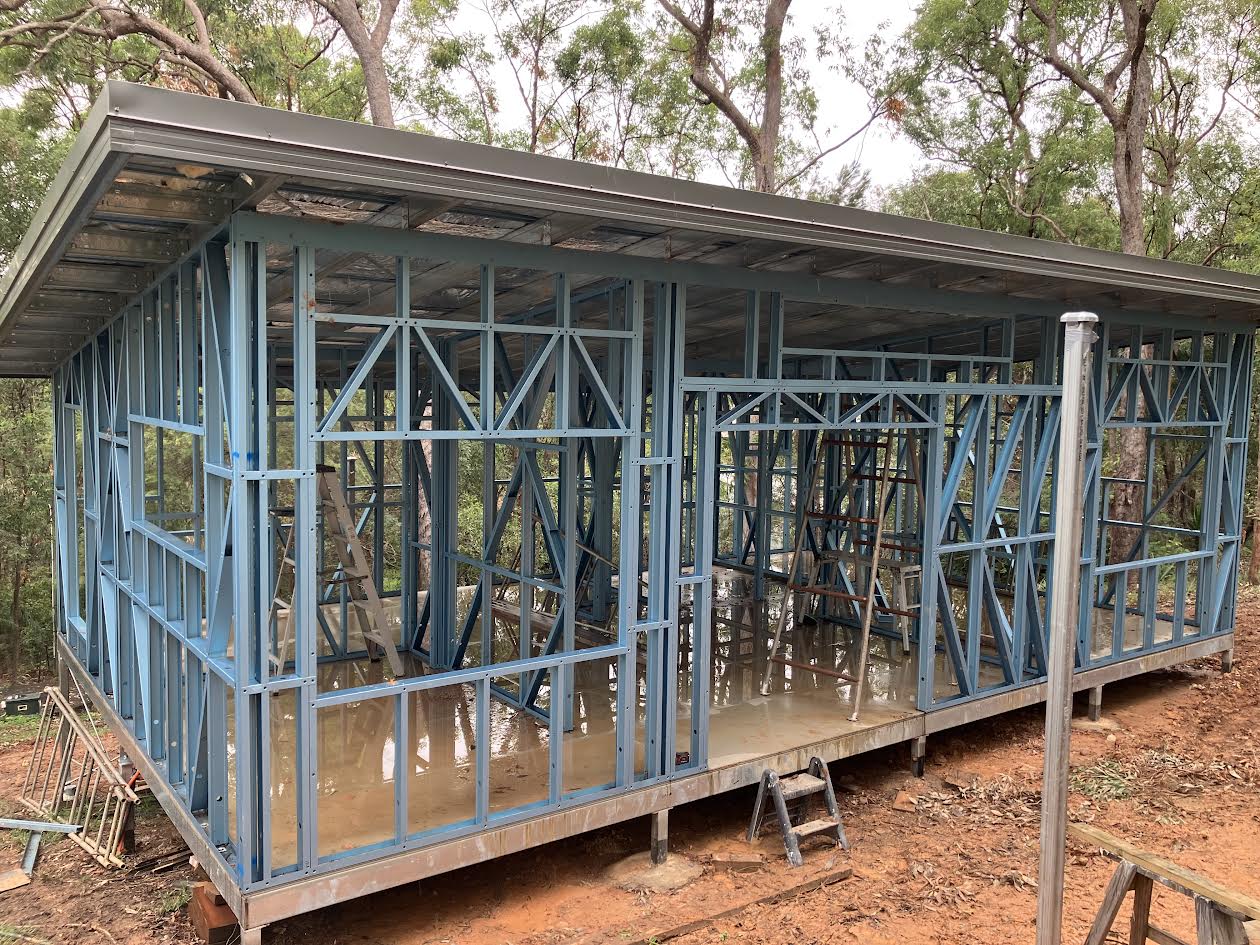
Thinking About A Secondary Dwelling? Here’s Why Steel Frames Help
If you’re planning a secondary dwelling, granny flat steel frames give you a serious head start. Compact footprints demand accuracy; there’s no room for bowed studs, drifting openings or on-site guesswork. With steel, members don’t shrink or twist, service routes are pre-punched, and panels are fabricated to tight tolerances so everything aligns with the drawings. In this guide, you’ll learn why steel frames are ideal for 1–2 bedroom granny flats, how the wall, roof and floor components work together, what to expect for compliance and logistics, and the key steps to move from plans to an install-ready package.
Why Steel Frames Make Sense For Granny Flats
For small buildings, precision is performance. Granny flat steel frames are roll-formed and assembled to repeatable dimensions, which means straighter walls, consistent ceiling lines and door and window openings that land where they should. Because steel is dimensionally stable, there’s minimal movement over time—no seasonal swelling, no warping—and that translates to better finishes (think: neat tile lines, square cabinetry and quieter doors).
Durability also matters in small dwellings that often sit close to fence lines or vegetation. Steel is inherently resistant to termites and rot, reducing long-term maintenance risks. Fire performance is another advantage: non-combustible members and documented tie-downs and bracing support compliance with the National Construction Code (NCC) and relevant Australian Standards. Add the fact that panels and trusses are lighter for their strength, and you get safer handling on tight sites with less re-work and fewer call-backs.
From Plans To Packs: How A Granny Flat Frame Comes Together
The most efficient projects follow a clear path: quote → detailing → engineering → fabrication → delivery. After you upload your plans, the scope is confirmed and quoted with assumptions, inclusions and a delivery window. In detailing, the team converts architectural drawings into shop drawings that installers can follow—openings, service routes, bracing, tie-downs and fixings are all documented, and each panel or truss is given an ID that will later appear on a physical label.
With engineering, certificates and calculation summaries are issued to suit wind region, building importance level and environment class. Fabrication is then scheduled: members are roll-formed, punched, assembled and QA-checked; panels and trusses are labelled to match the drawing IDs; and everything is palletised by room, level or zone. Finally, delivery is coordinated with timed windows and, if needed, crane slots. When the packs arrive, your crew can set out quickly because the packing list maps directly to the drawing references—no hunting through components.
Design Essentials: Walls, Trusses And Floors Working As One
Great outcomes come from components that are designed to work together. For granny flats, that means the steel wall frames, steel roof trusses and steel floor systems are coordinated from the start.
Walls: Panelised Steel Wall Frames arrive with openings, lintels/headers and bracing called out, plus pre-punched routes for plumbing and electrical. IDs match the drawing set for quick set-out.
Roof: Steel Roof Trusses are engineered for gable, hip or mono forms, designed to the nominated wind region and roofing material. Layouts show bearing points, bracing and connections so installers and inspectors can trace load paths.
Floors: Steel Floor Systems (joists/bearers) are selected to meet deflection and vibration targets, with wet-area stiffening around bathrooms and laundries, and acoustic options for mid-floors if you’re stacking spaces.
When these elements are detailed together, penetrations are planned, trimmer members around large openings are sized correctly, and tie-downs connect cleanly from roof to slab or subfloor. The result: fewer compromises on site and a smoother inspection.
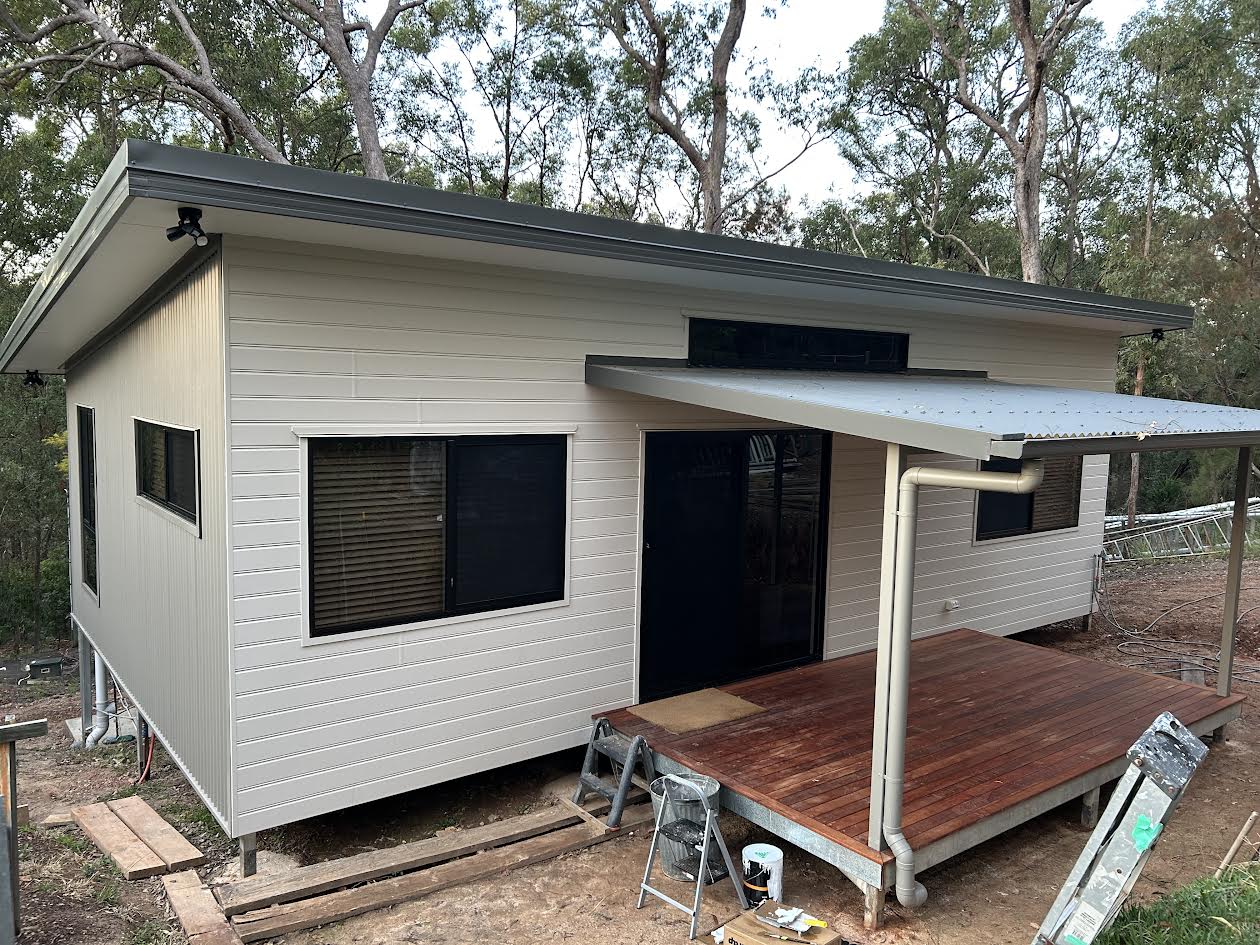
Compliance, Wind Regions And Coatings: What To Know
Every granny flat must meet the NCC and relevant AS/NZS standards. In practice, that means your frame is engineered to wind region and importance level, bracing and tie-downs are specified, and corrosion protection is matched to the site’s environment class (for example, coastal or industrial settings may require elevated protection and maintenance notes).
Builders should expect a documentation pack that includes shop drawings, engineering certificates, fixing/tie-down and bracing details, and corrosion specifications. Inspectors care about clarity; labelled drawings and matching pack IDs make site checks faster. For general guidance, see the National Construction Code (NCC) and your local authority (e.g., QBCC for Queensland) for licencing and practice frameworks. These sources support approvals and set shared expectations for documentation quality.
• Australian Building Codes Board — National Construction Code
• Queensland Building and Construction Commission (or your local regulator)
Real-World Example: A 2-Bed Granny Flat On A Tight Site
Consider a 60–65 m², two-bedroom granny flat tucked behind an existing home with narrow side access. The owner wants clean finishes, a quiet mid-floor over the bedrooms, and a roof suited to local wind conditions.
Detailing: The plan is converted into panels with pre-punched service routes, and trusses are set to a mono-pitch to suit the cladding and stormwater plan. Wet-area stiffening is added around the bathroom; a larger living room opening receives a correctly sized lintel.
Engineering: Certificates are issued to the site’s wind region, with bracing and tie-downs mapped on the drawings. Coatings are selected for a near-coastal environment with maintenance guidance.
Fabrication & Delivery: Panels and trusses are labelled and packed in install order. Because access is tight, delivery is staged: walls and floor packs arrive first; roof trusses and battens come on a second drop to match crane timing. On site, set-out proceeds quickly because the packing list references the same IDs shown on the drawings.
The outcome is a short, predictable install with straight plasterboard lines, true door reveals and a quiet floor—without ad-hoc drilling or on-the-fly fixes.
Cost, Timing And Logistics: What To Expect
Accurate pricing ties back to drawings, spans, geometry and wind region. You should also see clear assumptions (e.g., cladding type, environment class) and a realistic delivery window. Timeframes improve when questions are resolved in detailing, because every revision avoided during install saves hours on site. Logistics is where a coordinated supplier stands out: labelled packs, known dimensions for transportation and deliveries aligned to crane windows reduce double handling and risk of damage.
If you’re working on a sloping block or a narrow lot, ask for staged deliveries by room/zone and for panel lengths optimised to your access constraints. For coastal or industrial locations, confirm environment class early so coatings can be specified in your quote and drawings. These small decisions compound into big wins on programme certainty.
Final Thoughts
Granny flat steel frames shine where accuracy and speed matter most. Dimensionally stable members keep walls straight and openings precise; pre-punched service routes reduce on-site drilling; and labelled, sequenced packs turn drawings into a clear install path. With integrated detailing, engineering, fabrication and transportation, you get compliant documentation, predictable logistics and a cleaner finish—whether it’s a 1-bed studio or a 2-bed secondary dwelling.
Ready to move from plans to packs? Explore Granny Flat Steel Frames or upload your plans for a precise quote and delivery window.