
Open Now
5-Star Service
Steel Vs Timber Frames In Australia: Cost, Speed, Compliance
8 Apr 2022
Speed & Predictability: Why Programme Certainty Matters
Choosing A Frame Material? Start With The Whole-Of-Build Picture
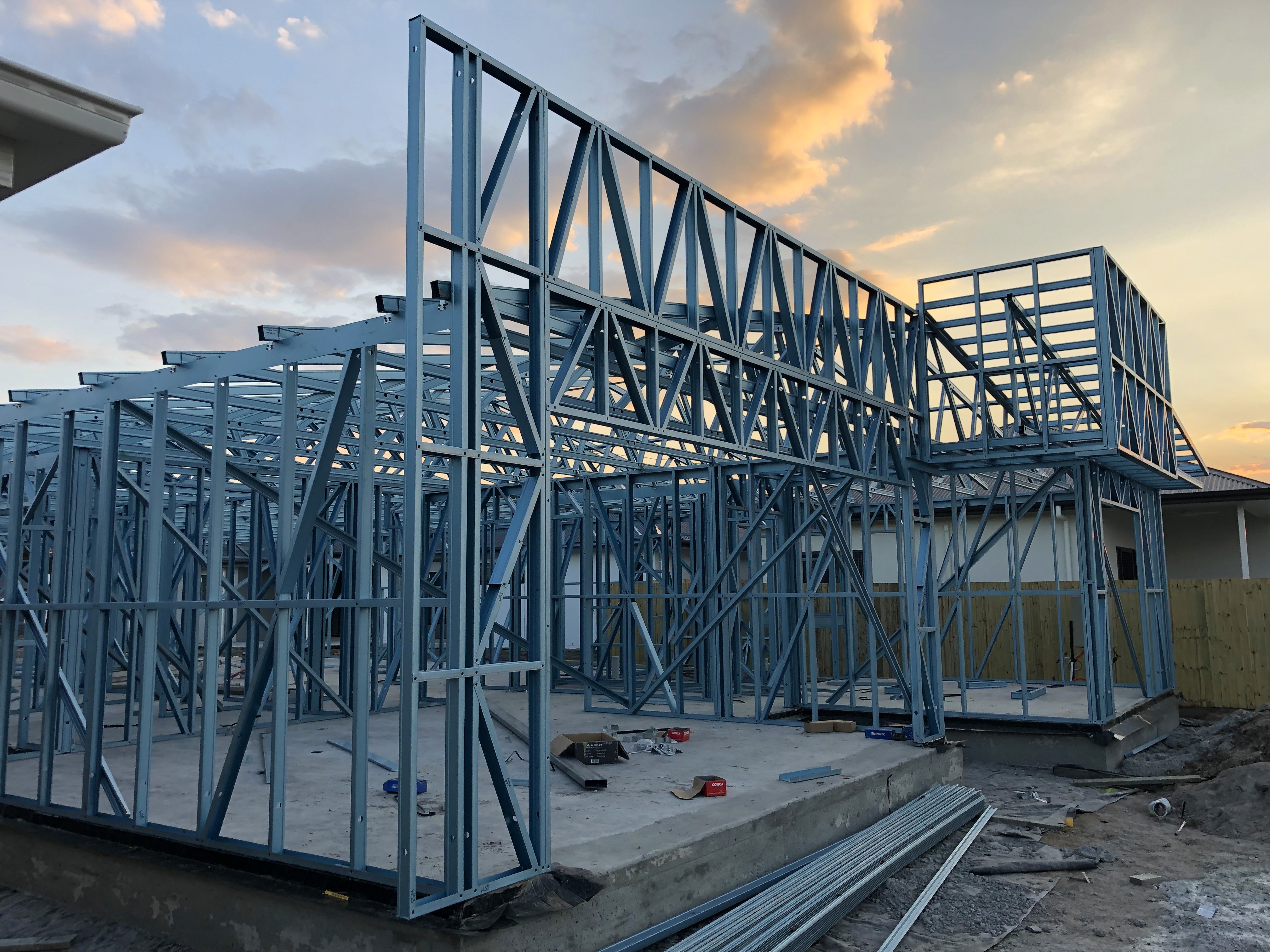
If you’re weighing up steel vs timber frames for a new home, granny flat or addition, it’s tempting to focus on the line-item cost of the frame itself. But the structure drives everything that follows: install speed, finish quality, defect risk, inspections and maintenance over the life of the building. Steel frames are roll-formed to tight tolerances, don’t shrink or warp, and arrive as labelled, pre-detailed panels and trusses—advantages that compound across set-out, plastering, tiling and cabinetry. Timber has a long history and can be economical in specific scenarios, but the most reliable answer comes from looking at total build time, compliance and downstream costs—not just the price of studs on day one.
The Cost Conversation: Materials, Labour And Downstream Finishes
Comparing steel vs timber frames on cost only makes sense when you include labour and finishes. Steel wall frames and trusses are fabricated to the drawings and delivered labelled to match the layout set. That accuracy reduces re-handling, speeds set-out and cuts back on site adjustments—savings you feel in labour and in fewer callbacks. Because steel stays straight, you’re less likely to fight wavy plasterboard, uneven tile lines or doors that bind, which protects budgets in finishing trades.
Timber can look cheaper at face value, especially where you have abundant supply or a crew set up exclusively for timber. But material variability and moisture movement can add hidden costs: extra planing, packing, re-hanging doors, or chasing seasonal cracks. When you factor the whole job—frame install, finishing, defect rectification—steel is often highly competitive and, in many projects, more economical by the time you reach handover. The best approach is a scoped quote based on your actual drawings, spans and wind region rather than generic allowances.
Get a scoped number with Free Quotes or review Steel Wall Frames for inclusions.
Speed & Predictability: Why Programme Certainty Matters
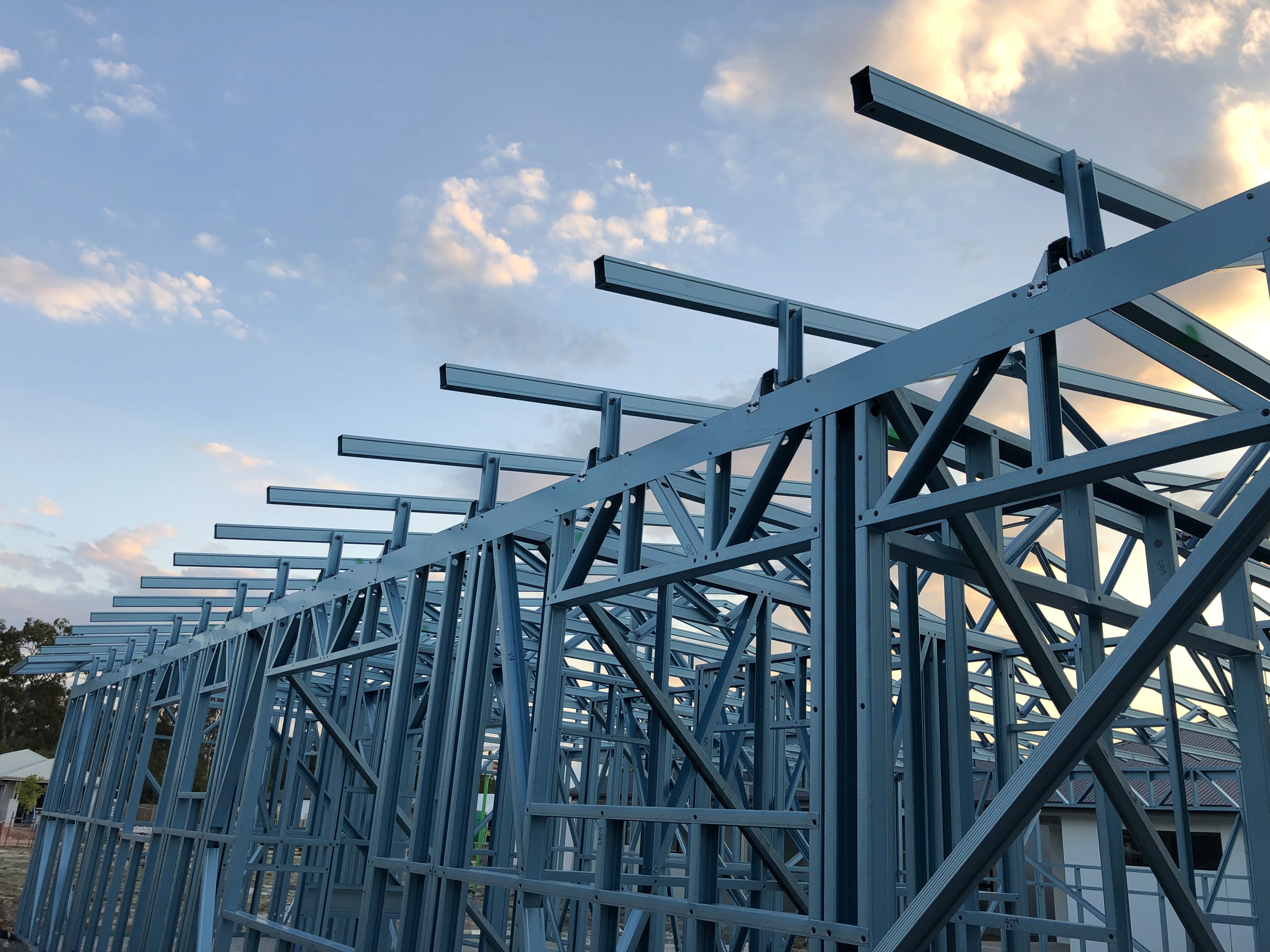
Speed is more than swinging a hammer quickly; it’s about predictability. Steel frames arrive as panelised walls and engineered trusses with IDs that line up to the drawings. Crews set out faster, cranes spend less time waiting, and deliveries can be sequenced by level or zone to fit tight sites. Pre-punched service routes reduce on-site drilling, which keeps plumbers and sparkies moving and preserves member capacity by design.
Timber framing can be fast with an experienced crew and perfect weather, but variability creeps in: moisture content, minor twists, or a joist that needs an extra packer. Those small delays stack up and can ripple into your plasterers and tilers. If your project has narrow access, a split programme, or a hard completion date (think: a rental granny flat or developer sequence), the predictability of labelled steel packs and documented fixings can be worth more than a small material saving.
Compliance, Termites & Fire: Meeting Australian Standards With Less Fuss
Compliance isn’t optional, and it’s an area where steel’s inherent properties simplify the path. Steel is non-combustible and dimensionally stable, which helps when documenting tie-downs, bracing and fixings to the National Construction Code (NCC) and relevant Australian Standards. Termite resistance is another clear advantage: steel isn’t a food source, reducing reliance on chemical barriers as the only line of defence. The CSIRO’s long-running guidance on termite risk management highlights the importance of both design choices and ongoing protection in susceptible areas—steel helps by removing timber framing from that risk category.
In bushfire-prone or high-wind regions, engineered steel roof trusses and tie-down details can be designed precisely to the nominated wind region and bushfire attack level. Timber can also meet code with the right detailing and treatments, but often requires additional specifications or maintenance pathways to stay compliant over time. With steel, the inspection conversation tends to be clearer: labels map to drawings; connections and bracing are documented; and the frame doesn’t change dimension while you’re waiting for sign-off.
• Australian Building Codes Board — National Construction Code (NCC)
• CSIRO — Termite risk management guidance
Design & Performance: Spans, Movement And Finish Quality
Steel’s strength-to-weight performance allows efficient spans in floors and roofs, which can open up living areas and reduce the need for intermediate supports. In walls, roll-formed members and consistent geometry keep plasterboard planes straight and cabinets square. Because steel doesn’t absorb ambient moisture the way timber does, it won’t shrink and telegraph movement into cornices or tiles months after handover.
Timber can absolutely deliver good results, particularly with kiln-dried product, disciplined storage and careful selection on site. But even well-managed timber frames can move seasonally, and that movement shows up in finishes. If you’re targeting a crisp architectural result, curved features, or long tile runs, the dimensional stability of steel reduces the number of compensating tricks needed during finishing and keeps outcomes more repeatable across multiple dwellings.
Sustainability & Lifecycle: Waste, Reuse And Maintenance
Sustainability isn’t just about embodied energy—it’s also about waste and lifecycle maintenance. Steel frames are produced to a precise take-off, which limits offcuts. Scrap steel is straightforward to recycle, and accurate prefabrication reduces site waste across trades. Over the life of the building, termite resistance and moisture tolerance cut the risk of invasive repairs. For clients worried about chemicals in or around the home, eliminating structural timber can reduce reliance on treated products and barrier reapplications, depending on the site’s risk profile.
Timber is renewable and can be an excellent low-carbon choice when sourced responsibly and detailed carefully; the trade-off is making sure the frame stays dry and protected from pests for decades. If your site is high risk for termites or moisture (coastal, tropical, or shaded blocks), steel simplifies that equation and reduces long-term maintenance.
A Quick Scenario: Two Identical Granny Flats, Different Frames
Picture two 60 m² granny flats on similar suburban blocks. The timber job prices a little lower on materials. Mid-build, the team spends time straightening bowed studs, drilling extra service holes and packing door openings. Plasterers chase a few waves and the tiler makes allowances to hide minor movement; nothing dramatic, but the programme slips a week and there are small defects to revisit after settlement.
The steel job arrives with wall frames labelled to drawing IDs and roof trusses designed to wind region. Services follow pre-punched routes; set-out is quick; and the packing list matches install order. Finishes go in square, and the QA walkthrough focuses on the plan rather than ad-hoc adjustments. The original timber material saving is eclipsed by labour time and a cleaner finish that avoids call-backs—especially valuable if the flat is heading straight to rental.
Final Thoughts: Pick The Frame That Protects Your Programme
When you compare steel vs timber frames across cost, speed, compliance and finish quality, steel consistently reduces variables: straighter walls, documented connections, termite resistance and labelled, sequenced deliveries that keep the site moving. Timber still has its place, but if your priorities include programme certainty, high-finish interiors and fewer surprises at inspection, steel is the safer bet—particularly for granny flats, additions and tight-access sites.
If you’d like numbers based on your drawings and wind region, send your plans through for a scoped quote and delivery window. Start with Free Quotes or explore Steel Wall Frames for what’s included.