
Open Now
5-Star Service
Steel Framing vs Timber Framing: Cost, Durability and Build Time Comparison
29 Jan 2026
Introduction: The Frame That Shapes Your Home’s Future
Choosing between steel and timber framing is one of the biggest structural decisions you’ll make for your home or project. It influences cost, build time, strength, energy efficiency, and even how your home performs over decades.
For many Australian builders and homeowners, this choice often comes down to balancing short-term savings with long-term value. Timber is familiar and traditional, while steel framing has emerged as a modern alternative engineered for strength, precision, and speed.
In this blog, we’ll compare steel vs timber framing across the factors that matter most:
Cost, Durability, and Build Time backed by real industry insights and Frametek’s professional expertise in light gauge steel fabrication.
Blog Overview
Here’s what you’ll discover in this detailed comparison:
Real-world cost insights — upfront vs lifetime value of steel and timber frames.
Durability deep dive — which frame stands the test of time in Australian conditions.
Build time analysis — how prefabricated steel frames speed up projects.
Pests, fire & weather — side-by-side performance in real Aussie environments.
Sustainability edge — how steel framing supports eco-friendly building practices.
Expert guidance from Frametek — helping you make the right structural choice.
1. Cost Comparison: Steel Framing vs Timber Framing in Australia
When it comes to the bottom line, the question most builders and homeowners ask first is simple:
Which is cheaper steel or timber framing?
Upfront Costs
In 2026, the average steel framing cost in Australia ranges between $1,300 and $2,000 per square metre, depending on design complexity, finishes, and engineering requirements.
Timber framing usually falls between $1,100 and $1,800 per square metre, making it slightly cheaper upfront.
However, Frametek’s advanced manufacturing process helps reduce wastage and labour time, making steel frames more cost-competitive than many assume.
Lifetime Value
Here’s where steel starts to shine.
While timber frames may appear cheaper at first, steel framing provides a better long-term return due to:
Zero termite damage (no ongoing pest control costs)
Minimal maintenance over decades
Resistance to warping, rot, and mould, meaning fewer repairs
Keyword Focus: steel framing cost Australia 2026, steel frame house cost per square metre, maintenance cost timber vs steel framing
When factoring repairs, pest treatments, and potential replacements, steel often becomes the more economical choice within 10–15 years of ownership.
Example:
A 200m² home built with steel may cost ~$10,000–$15,000 more initially than timber, but can save $20,000–$30,000 over its lifespan through lower maintenance, fewer structural issues, and increased resale appeal.
2. Durability: Which Frame Lasts Longer in Australian Conditions?
Australia’s climate can be tough from coastal humidity to bushfire zones and termite-heavy regions. Your frame must withstand it all.
Steel Frame Durability
Steel framing is engineered to last 50 years or more, maintaining its shape and strength throughout. Frametek’s precision-fabricated steel frames are designed for:
Termite resistance, completely immune to infestations.
Fire resistance, non-combustible, ideal for bushfire-prone areas.
No warping, rotting, or shrinking, even in humidity or heat.
Corrosion-resistant coatings that protect against rust and moisture.
Timber Frame Durability
Timber, on the other hand, can be vulnerable to environmental and biological threats:
Termite and borer damage without regular treatment.
Moisture absorption, leading to warping and rot.
Combustible in bushfires (treated timber offers some resistance, but not immunity).
Real-World Example
A timber home in Queensland may require annual termite inspections costing $300–$500, plus potential repairs if damage occurs. A steel-framed home by Frametek eliminates that risk entirely.
Keyword Focus: durability of steel frames vs timber, how long do steel frames last, steel frame termite resistance vs timber, fire safety steel vs timber framing
3. Build Time: Speed and Efficiency with Modern Framing Systems
In today’s construction landscape, time equals money. Faster builds reduce labour costs, financing periods, and project stress.
Prefabricated Steel Frames
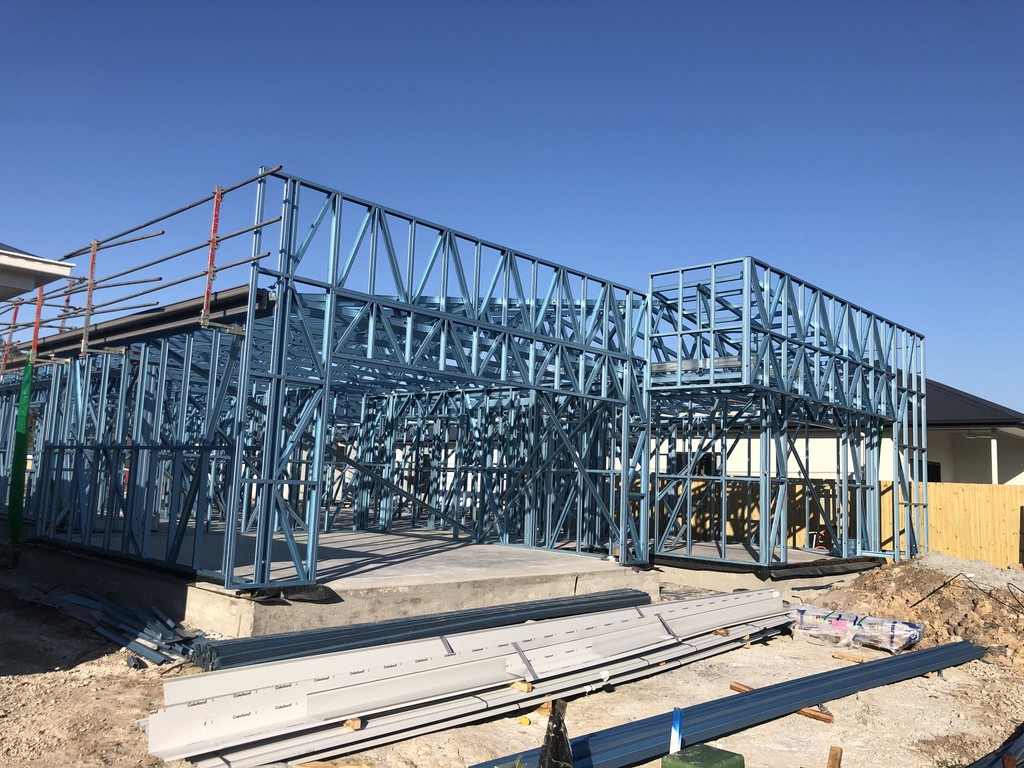
Frametek specialises in off-site fabricated steel frames, meaning every wall, truss, and joist is precision-engineered and delivered ready to install.
This process offers major time savings:
Faster assembly — steel frames slot together perfectly, like a 3D puzzle.
Less on-site waste — pre-cut to exact dimensions.
Weather resilience — no swelling or drying delays due to rain or humidity.
Streamlined workflow — compatible with BIM (Building Information Modelling).
Builders often report 20–30% shorter project timelines when using pre-fabricated steel systems.
Timber Frames
Timber framing can be built on-site, but requires manual cutting and adjustment, increasing labour hours. Weather changes can warp timber during construction, slowing progress further.
Keyword Focus: build time steel framing vs timber, steel vs timber framing Australia
Bottom Line:
Steel framing doesn’t just save time it increases accuracy, reduces errors, and improves overall build quality.
4. Strength, Safety, and Performance
Durability isn’t only about longevity it’s also about structural strength and safety.
Structural Integrity
Steel frames have a high strength-to-weight ratio, allowing for larger open spaces, longer spans, and creative architectural designs.
Unlike timber, steel doesn’t twist, warp, or settle meaning your walls stay straight and doors always close smoothly.
Fire & Termite Resistance
In Australia’s bushfire zones, non-combustible materials like steel are not just a preference they’re a smart safety decision.
Steel won’t ignite, adding a critical layer of protection for your family and property.
And because it’s 100% pest-proof, you’ll never have to worry about termite damage undermining your investment.
Sustainable & Eco Benefits
Recyclable: Steel is endlessly recyclable without quality loss.
Low waste: Precision manufacturing reduces offcuts.
Sustainable sourcing: Modern steel uses high recycled content.
Keyword Focus: sustainable steel framing benefits, environmental impact steel vs timber, sustainable steel framing Australia
By choosing Frametek, you’re supporting a smarter, greener construction future one that blends performance with sustainability.
5. Environmental Impact: Sustainability in Modern Construction
With sustainability now a core value for homeowners and developers alike, it’s essential to look at the environmental footprint of both materials.
Steel Framing Sustainability
Fully recyclable: Every piece can be reused or repurposed.
Minimal site waste: Prefabrication reduces landfill output.
Energy efficiency: Steel frames can be combined with advanced insulation and thermal breaks to reduce heat transfer.
Frametek’s production process emphasizes low-waste fabrication, aligning with Australia’s drive toward greener, more efficient building practices.
Timber Framing Sustainability
While timber is renewable, its sustainability depends on responsible sourcing and treatment processes.
Chemical treatments for pest resistance can reduce its eco-friendliness, and deforestation remains a concern in some regions.
6. The Verdict: Which Framing Material Wins?
Let’s break it down simply:
Feature | Steel Framing | Timber Framing |
Upfront Cost | Slightly higher | Lower |
Maintenance | Very low | Moderate to high |
Durability | 50+ years, termite/fire resistant | Susceptible to pests, rot, fire |
Build Time | Faster (prefabricated) | Slower (on-site construction) |
Eco Impact | Fully recyclable | Renewable if responsibly sourced |
Precision | High, minimal waste | Manual variation possible |
Final Verdict:
Steel framing edges out timber across durability, build time, and long-term cost efficiency. Timber still has appeal for smaller or rustic builds, but for most modern Australian homes and commercial projects, steel is the smarter structural investment.
And when you partner with Frametek, you’re not just choosing a material you’re choosing engineering precision, faster delivery, and a frame built to last generations.
7. Why Frametek is Australia’s Trusted Steel Framing Partner
Frametek has redefined how builders and homeowners approach framing combining cutting-edge design, fast fabrication, and unmatched reliability.
What sets Frametek apart:
Custom-engineered steel framing solutions for every project.
Advanced technology & precise fabrication ensuring flawless fit on-site.
Fast turnaround times through efficient manufacturing processes.
Environmentally responsible practices with minimal waste.
Comprehensive support from design to installation.
Whether you’re building a new home, extension, or commercial structure, Frametek ensures your project stands tall today and for decades to come.
Conclusion: Build Smarter. Build Stronger. Build with Frametek.
When weighing steel framing vs timber framing, it’s clear that steel delivers superior strength, speed, and long-term savings.
It’s not just a frame it’s the foundation of a future-proof, low-maintenance, and sustainable build.
If you’re ready to explore modern steel framing solutions for your next project, talk to the experts at Frametek.
Our team will guide you through every step from design to delivery ensuring your build is faster, safer, and built to last.
Contact Frametek today to get a free consultation or quote.
Let’s shape the future of Australian construction one steel frame at a time.